INVALSI Statistical Department
STAGES OF THE SCOPING REVIEW
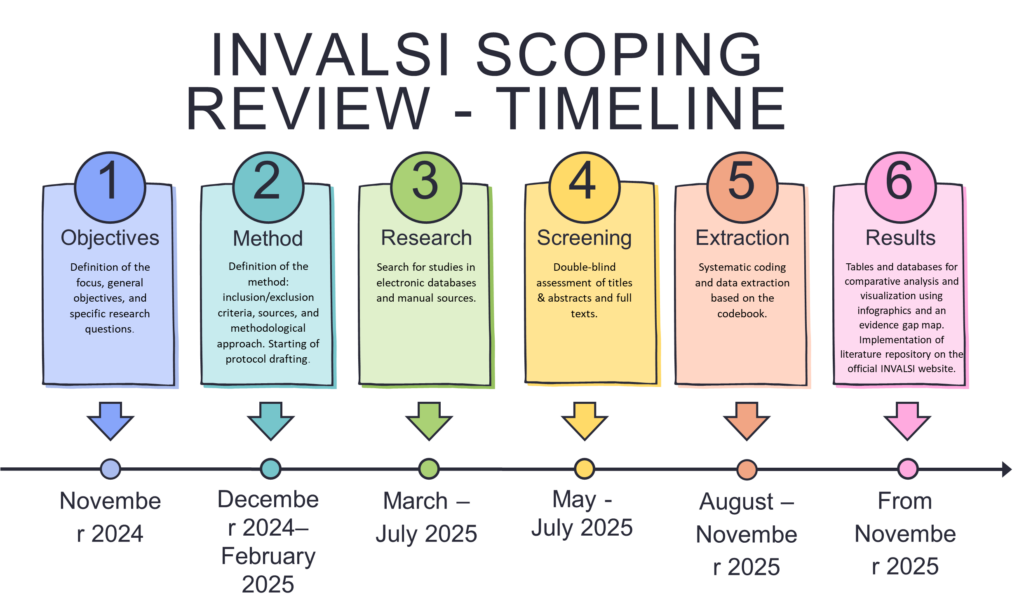
The research protocol was developed in accordance with the PRISMA-ScR (Preferred Reporting Items for Systematic Reviews and Meta-Analysis: Scoping Review extension). The scoping review was divided into six main stages:
- Definition of objectives. The focus of the research, the general objectives and the specific questions the scoping review aims to answer were outlined.
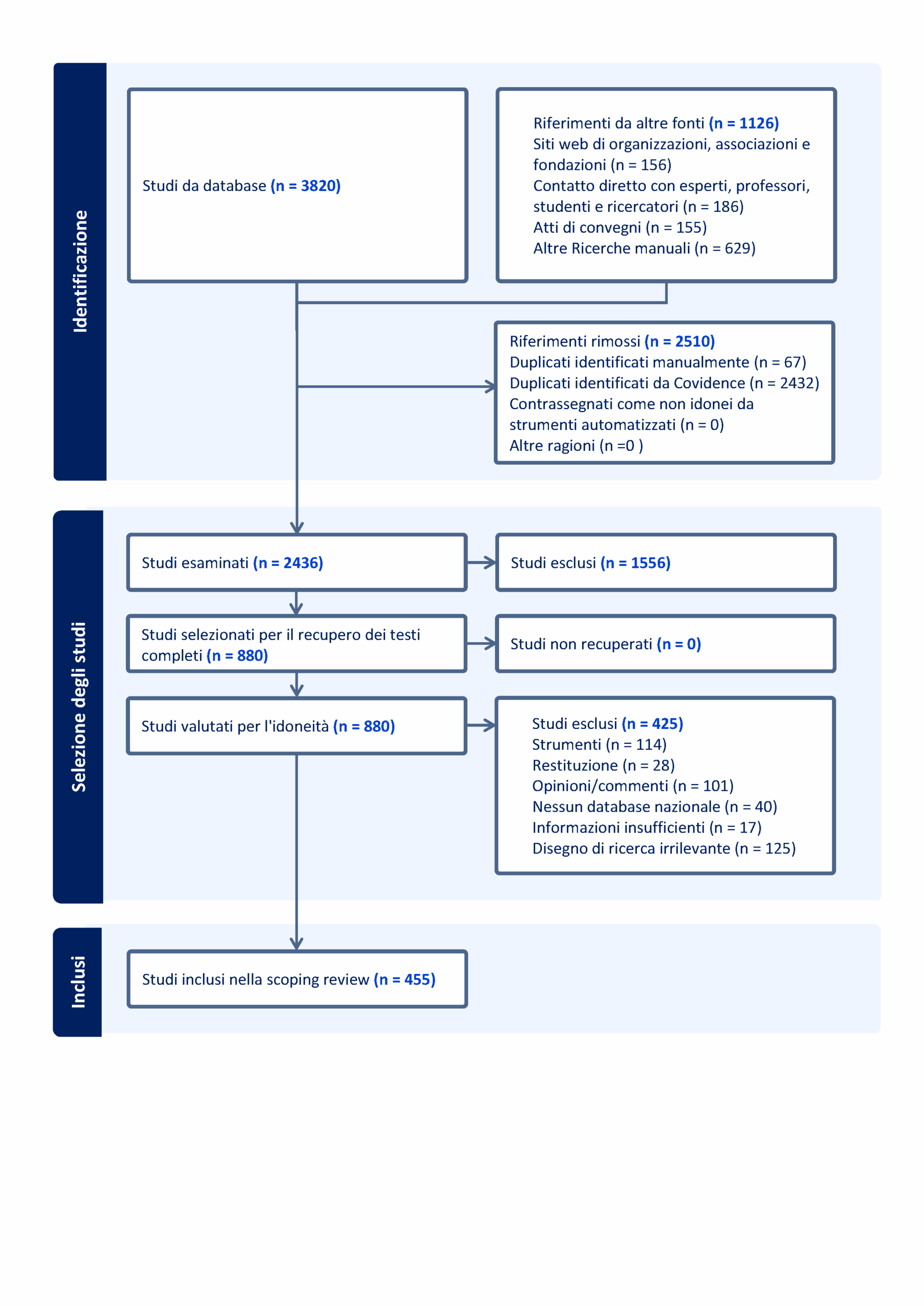
- Establishment of the research methodology. In line with the objectives, the inclusion and exclusion criteria, the types of studies and the sources to be consulted (databases, journals, repositories, grey literature) were established. To identify all eligible studies, a combination of strategies was adopted: searches of databases and journal archives, consultation of thesis repositories, and manual procedures to retrieve grey literature, including direct contact with researchers and consultation of official websites of organisations and associations. The entire process – from deduplication to selection, data extraction and coding – was managed using Covidence software to ensure systematicity and rigour.
- Research. Searches were conducted in electronic databases and manually in other sources to collect all relevant studies.
- Screening. The identification of studies for inclusion took place in two stages: evaluation of titles and abstracts, followed by analysis of the full texts. Both stages were carried out using double-blind peer review, with nine coders working in a double-blind manner, supported by specific guidelines and preliminary training to ensure consistency.
- Coding and data extraction. Following screening, key information from the included studies — authors, year of publication, population, methodology, etc. — was systematically coded. Data extraction was carried out using a codebook, which contained the variables, categories and operational instructions necessary to ensure uniformity and consistency in data collection.
- Summary of results. The extracted data were organised into tables and databases for comparative analysis, identification of trends and detection of gaps. The summary will be supported by infographics and evidence gap maps, tools that allow for the immediate visualisation of areas that have been explored, facilitating the identification of future priorities.