Opt-out complete; your visits to this website will not be recorded by the Web Analytics tool. Note that if you clear your cookies, delete the opt-out cookie, or if you change computers or Web browsers, you will need to perform the opt-out procedure again.
You may choose to prevent this website from aggregating and analyzing the actions you take here. Doing so will protect your privacy, but will also prevent the owner from learning from your actions and creating a better experience for you and other users.
The tracking opt-out feature requires cookies to be enabled.
Questo sito utilizza cookie tecnici e analitici.
Cookie policy
È online il programma completo della IV Conferenza Internazionale di Scuola Democratica – Learning for Democracy / Democracy for Learning, promossa dalla rivista Scuola Democratica in collaborazione con Sapienza Università di Roma e Il Mulino.
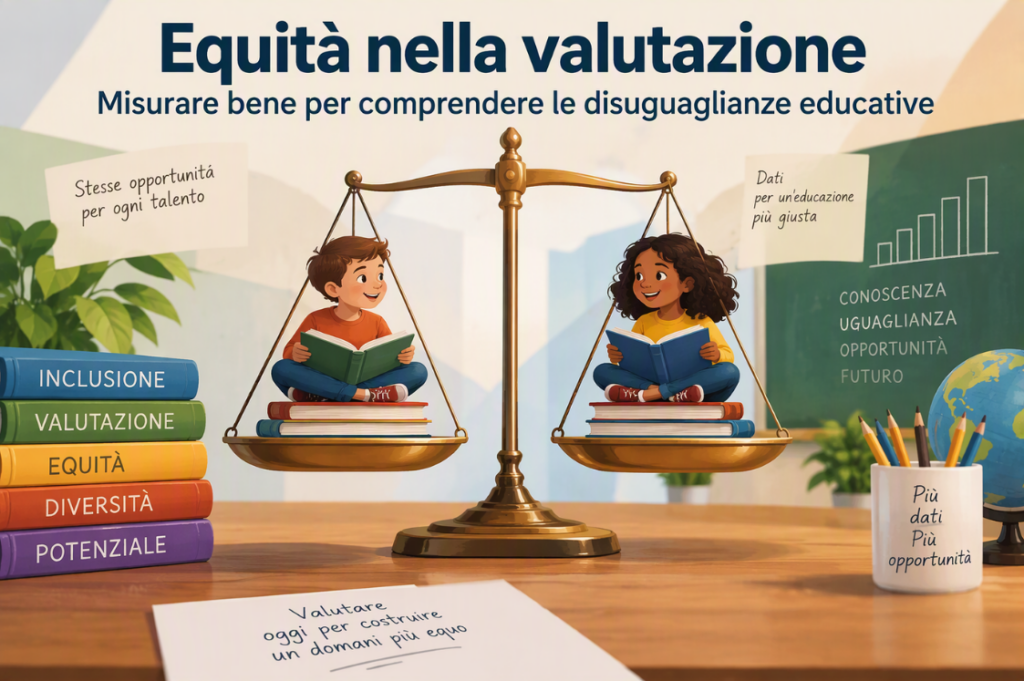
The volume collects six contributions presented at the ninth edition of the seminar (Rome, 17-19 October 2024). The contributions explore how gender, social background, and migrant status influence educational outcomes and choices, while also addressing inclusion, personalised learning pathways, and educational policies. The overall aim is to better understand the mechanisms that generate inequalities and to promote a more equitable and inclusive education system.
This issue of the newsletter “The Insights of the Statistical Department”, tratta della nuova rivista scientifica internazionale promossa da INVALSI, EJERE – European Journal of Evaluation and Research in Education, dedicata agli studi sulla valutazione educativa, la misurazione degli apprendimenti e l'analisi dei sistemi di istruzione.
The European Journal of Evaluation and Research in Education (EJERE) invites scholars, researchers, and practitioners to submit original contributions for its inaugural issue. EJERE is an international, peer-reviewed journal promoted by INVALSI, dedicated to advancing research on educational evaluation, large-scale assessment, and evidence-informed policy and practice. The journal aims to foster high-quality scientific debate and to bridge research, data, and decision-making in education systems.
The document outlines the theoretical and methodological framework for the INVALSI digital competences assessment, contextualizing it within broader landscape of societal and educational digital transformation. Digital competences are not viewed as merely technical skills, but rather as critical, ethical, and cross-cutting skills that are essential for learning, active citizenship, and reducing inequalities.
This issue of the newsletter “The Insights of the Statistical Department”, sarà improntato su un evento molto speciale, la nuova Conferenza 2026 “Evaluation and Research in Education” e l’apertura della Call for Panel.