Last news
Page 1 of 14

17 June 2026

European Journal of Evaluation and Research in Education (EJERE) – Call for papers

The European Journal of Evaluation and Research in Education (EJERE) invites scholars, researchers, and practitioners to submit original contributions for its inaugural issue. EJERE is an international, peer-reviewed journal promoted by INVALSI, dedicated to advancing research on educational evaluation, large-scale assessment, and evidence-informed policy and practice. The journal aims to foster high-quality scientific debate and to bridge research, data, and decision-making in education systems.

Categories

Journal
11 June 2026

Theoretical Framework for the INVALSI Digital Competencies Assessment 

The document outlines the theoretical and methodological framework for the INVALSI digital competences assessment, contextualizing it within broader landscape of societal and educational digital transformation. Digital competences are not viewed as merely technical skills, but rather as critical, ethical, and cross-cutting skills that are essential for learning, active citizenship, and reducing inequalities.

Categories

Insights
4 June 2026

Mathematical experiences to contrast learning loss and school drop-out

The volume collects six contributions presented at the ninth edition of the seminar (Rome, 17-19 October 2024). They provide a comprehensive overview of the factors that influence the learning of mathematics, including language, context, motivation, teaching quality, and inclusion. The volume thus provides a useful framework for reconsidering mathematics as a formative experience that can foster participation, equity and meaning.

Categories

Insights
19 May 2026

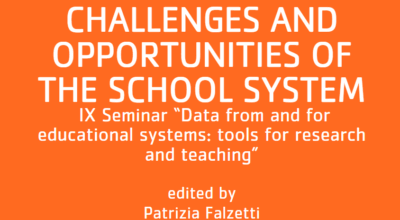
Using data inside and outside the classrooms. IX Seminar “Data from and for educational system: tools for research and teaching”

The volume collects four research papers presented at the nine edition of the “Data from and for educational system: tools for research and teaching” seminar (Rome, 17-19 October 2024). The volume analyses how different data sources help interpret how educational systems function and improve students’ opportunities. Although adopting different methodological approaches, the chapters share the view of data as both an interpretative and an operational tool for more equitable, informed, and responsive educational systems.

Categories

Insights